Skip to content

#sogehtmorgen

Methods are the means. Effect is the goal.

I choose tools not by what is fashionable, but by what genuinely moves people and organisations forward.

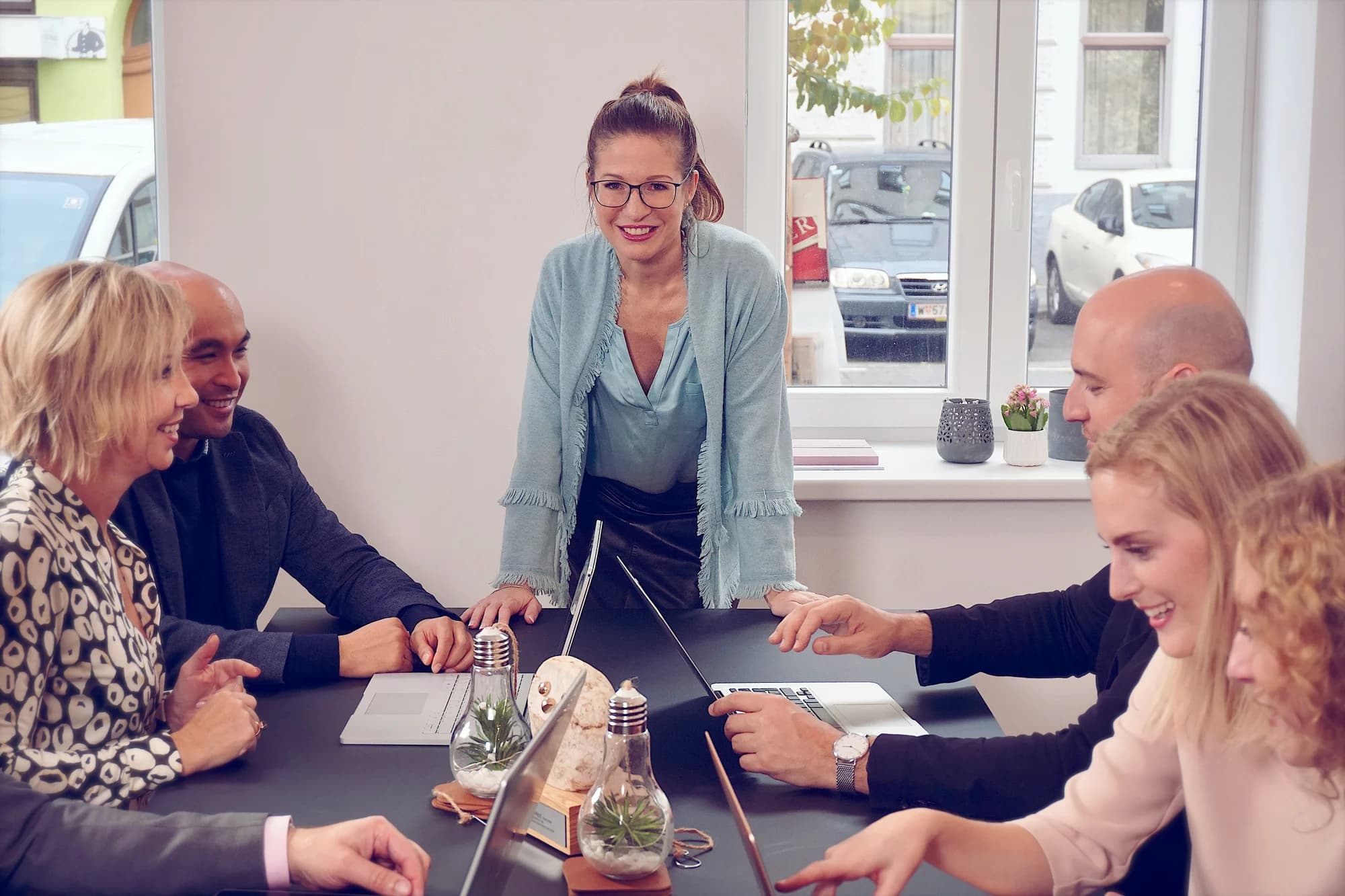
A group working at a table with the materials of a simulation

Experience. Understand. Apply.

The method always follows the goal – not the other way round.

The method follows the goal

I do not use methods because they happen to be in fashion or look particularly spectacular. I choose them according to what people need to recognise, experience and change in a specific situation.

Sometimes it takes a profile that makes differences understandable. Sometimes a simulation in which behaviour becomes visible under realistic conditions. And sometimes a protected space in which teams can try out new strategies.

Interpersonal Skills LAB

Experiencing behaviour when it really matters.

Interpersonal Skills LAB is a digital real-time simulation for leadership, communication and team skills. Participants take on a virtual space mission together. When the spacecraft runs into a critical situation, they have to make decisions under time pressure, with knowledge spread across the group and in a fast-moving situation.

The fictional scenario has one decisive advantage: professional expertise from people's own jobs recedes into the background. That makes it visible how people actually communicate, lead, pass on information, set priorities and act as a team.

In the simulation, decisions have immediate consequences. Behaviour can be observed, reflected on and deliberately changed in a further round. What emerges is not a set of theoretical intentions, but courses of action that have actually been tried out for everyday work.

I use Interpersonal Skills LAB when leadership and collaboration need to become tangible under demanding conditions – under time pressure, for complex decisions, in change, or where different roles have to work together.

Interpersonal Skills LAB at the provider(opens in a new tab)

Discovery of NEXUS

Experiencing leadership and collaboration across several levels.

Discovery of NEXUS extends the simulation to a complex organisation. The scenario is about settling a planet. The overall task is spread across several operational teams and a three-tier leadership structure.

This makes it visible very quickly how leadership works across different levels: how is information passed on? How clear are responsibilities? Are decisions made where the necessary knowledge sits? Are the teams pursuing a shared goal – or is each unit only optimising its own area?

The simulation makes the typical friction points of complex organisations immediately tangible. Participants can develop personal courses of action, try out leadership strategies and test their effects before applying them in the real working world.

Discovery of NEXUS is particularly suited to leadership programmes, cross-departmental collaboration, change processes, distributed teams and organisations in which several levels have to act in a coordinated way under fast-moving conditions.

One year of «Discovery of NEXUS»(opens in a new tab)

Everything DiSG®

Understanding behaviour. Shaping communication more consciously.

Everything DiSG® is a non-judgemental model that makes different behavioural preferences visible and open to discussion. It distinguishes four basic dimensions: dominance, influence, steadiness and conscientiousness.

An adaptive online assessment shows which priorities, motivators and stress factors shape a person's behaviour. It reveals, for example, how someone responds to challenges, how they try to convince others, what working pace they prefer, or how they deal with rules and structures.

One thing matters here: DiSG® is an instrument for dialogue, not a diagnosis. No style is better or worse than another, and the profile says nothing about intelligence, ability or professional success.

In workshops, the profile becomes a shared language. People understand why others communicate, decide or respond to change differently. That understanding helps to lead more individually, to work through conflicts more constructively and to improve collaboration in teams.

HBDI®

Using different ways of thinking as a strength.

HBDI® makes preferred ways of thinking visible. The underlying Whole Brain® Thinking model distinguishes four perspectives: factual, practical, interpersonal and experimental thinking.

In principle, all four ways of thinking are available to everyone. In everyday life, however, we favour certain approaches. Some people want to understand data and facts first. Others look at processes and feasibility, at relationships and the people involved, or at new ideas and future possibilities.

The HBDI® profile shows these individual thinking preferences and also makes visible how they can shift under stress. Team profiles reveal which ways of thinking are strongly represented and which perspectives may be given too little weight in decisions.

This does not produce a division into right and wrong thinkers. Rather, a shared understanding develops of how cognitive diversity can be used for better communication, more rounded decisions, innovation and collaboration.

The central question is not: who is thinking correctly? It is: which perspective are we still missing?

Let us talk about which method fits your goal – and which does not.