Skip to content

12 Levers of Transfer Effectiveness

Effectiveness is something you can book.

As a keynote, a transfer certification or a fast track. Scientifically grounded. Tested in practice. Ready to apply.

In close cooperation with the Institute for Transfer Effectiveness.

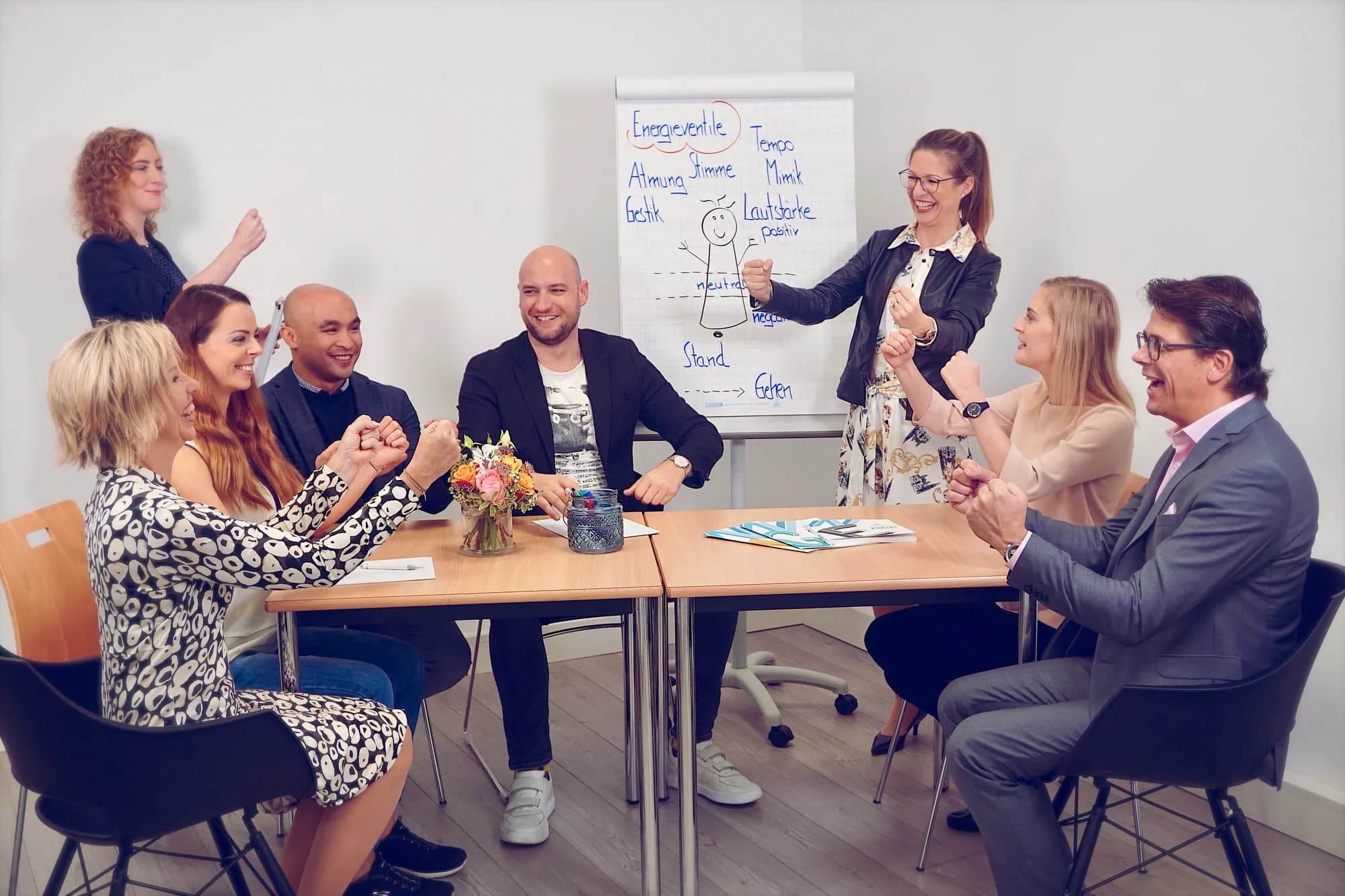
A seminar group at a table, with a trainer at a flipchart in front of them
Seal of the Institute for Transfer Effectiveness: Eva-Maria Kraus, Senior Transfer Enabler, Recertified Transfer Designer 2025

Institute for Transfer Effectiveness

Senior Transfer Enabler and Recertified Transfer Designer

The 12 levers come out of the research of the Institute for Transfer Effectiveness. Eva-Maria Kraus is a certified Transfer Designer there; the transfer certification and the fast track are run together with the institute.

Go to the Institute for Transfer Effectiveness(opens in a new tab)

Three routes to more transfer success

Good training is not automatically effective training

A training course can be inspiring, receive excellent ratings and still change little in everyday work. Learning and applying are two different steps. Transfer effectiveness describes the extent to which participants actually use what they have learned after a learning intervention – and the extent to which relevant results follow.

Whether that transfer succeeds does not depend on the quality of the training day alone. What is decisive is the interplay of participants, training design and organisation. Motivation and confidence have to be right, and so do content relevance, practice, concrete transfer planning, opportunities to apply and support in the working environment.

Effectiveness is therefore not added at the end. It is thought through and designed from the very beginning.
What are the 12 Levers of Transfer Effectiveness?

The model of the 12 levers was distilled by Dr Ina Weinbauer-Heidel from more than 100 years of transfer research. It brings together the factors that most clearly influence the transfer of learning into everyday work and that can, at the same time, be actively shaped.

The levers are not a rigid recipe. They serve as a model for orientation and analysis: where do the greatest transfer opportunities lie in a particular programme? Which obstacles are foreseeable? And at which points is it worth investing deliberately?

Transfer thus turns from a good intention into a design task that can be planned.

The 12 Levers of Transfer Effectiveness at a glance

Three areas of influence, twelve factors you can shape. Tap a lever to open its description.

Participants

Training design

Organisation

What does working with the levers achieve?

The 12 levers create a shared language for clients, HR, managers, trainers and participants. They help to:
  • recognise obstacles to transfer early
  • define clear transfer goals and the intended business impact
  • design programmes that fit the target group and the organisation
  • involve managers and colleagues deliberately
  • select suitable tools and interventions
  • prepare concretely for application in everyday work
  • make effectiveness visible and open to discussion

How I design transfer effectiveness

  1. 01

    Clarify the goal

    We define what participants should concretely do differently after the programme, and what that behaviour contributes to the organisation's goals.

  2. 02

    Analyse the starting point

    We look at the relevant levers: what already supports transfer? Where are the risks or barriers? Which people need to be involved?

  3. 03

    Develop the transfer design

    We combine learning content, practice, reflection and concrete transfer interventions into a learning architecture that fits the target group and the working environment.

  4. 04

    Support the application

    Reminders, exchange, feedback, impulses for managers or transfer assignments help to try out new behaviour in everyday work and make it stick.

  5. 05

    Make the effect visible

    We look not only at satisfaction and learning success, but also at application and effect. That shows what has changed and where adjustments are needed.

Formats

Three ways in – depending on whether you want to set things in motion, build capability or get concrete quickly.

Transfer certification

Designing transfer success systematically.

The certification qualifies trainers, learning and development leads, HR specialists and internal programme owners to analyse the 12 levers rigorously and translate them into effective learning and transfer designs. Participants work on their own cases and develop concrete interventions for their practice.

Open or in-house – in cooperation with the Institute for Transfer Effectiveness.

Enquire about the certificationDates and details at the institute(opens in a new tab)

Fast Track

The compact way into effective transfer design.

The Fast Track conveys the logic of the 12 levers in a focused format. Together we review an existing or planned programme, identify the most important transfer levers and derive concrete next steps. Ideal for teams and organisations that want to move quickly towards a more effective design.

Book the Fast TrackDates and details at the institute(opens in a new tab)

The training day is the beginning. The effect shows afterwards.

Let us talk about your programme – and about which levers would make the biggest difference for you.